Saturday, February 28, 2015

The Americas

History/ Locale:
The history of the Americas took place from about 2000 B.C. to 1520 A.D. What we will consider to be the Americas includes parts of modern day Mexico and South America. The civilization at this time was divided into cultural groups, who were independent of one another and other civilizations. Their actions and design were based only on their own experiences, not adapted from others, such was the case in Europe and Africa at this time period. Most of the settlements of these groups were based around a centralized ceremonial center, as religion was a large factor, if not the most important aspect, of life for these groups. The majority of civilizations in the Americas at this time were polytheistic in their faith and believed in human sacrifice.

Olmecs:
This was the first major civilization in the Americas, it lasted from approximately 2000 B.C. to 200 B.C. In 200 B.C. it came to a sudden violent end, it is unknown why this happened. This people group created hieroglyphic writing, the 1st calendar in the Western Hemisphere, and realistic art work. The Olmec also provide us with the first example of a temple focused city type. Which tells us that the center of daily life for this group, was religion. This group is also well known for their artwork, particularly the sculptures of heads, that were discovered in the city of La Venta.
Olmec city of La Venta


Mayas:
This civilization flourished for about 1800 years, from 300 B.C. to 1521 A.D. They were destroyed by the Spanish conquest of 1519. One of the most famous Maya landmarks is Chichen Itza, located in present day Yucatan, Mexico. This was also a temple centered city, whose name means "mouth of the well of the Itza." 

Image result for chichen itza
The temple "Castillo"
Extra Credit: http://www.history.com/topics/maya/videos/seven-wonders-the-temple-of-chichen-itza
This link takes you to a very interesting video about the temple at Chichen Itza.


Aztecs:
This group, which thrived from 1150-1520 A.D., is best known for the city of Tenochtitlan. Tenochtitlan was the center capitol of Aztec civilization. This city was actually a major engineering feat that would be difficult to accomplish with today's technology, considering the fact that it was built in the middle of a lake. The land had to literally be brought in from outside, builders had to gather soil and mud and build up the land mass to create a vast piece of land, that in the end housed approximately 3 million people. They created the a system of raised gardening in wetlands, called "chinampas", which is where the idea hydroponics originated. The city was conquered by the Spanish in 1520, which unfortunately brought this group to it's demise. 


Current day "chinampas", which would have looked very similar in Tenochtitlan

Incas:
The Incas were the largest empire in Pre-Columbian America. The most famous location of Incan culture, is Machu Picchu. Machu Picchu is located in present day Peru. This former city, is located in a seismically unstable area, so it is a miracle that it is still standing today. Another amazing fact about this location is that it was built entirely without using mortar, but is still standing strong today. This location also has trapezoid shaped openings, for windows and doors which is a shape that we have not seen used up until this time. 

Machu Picchu in the mountains of Peru
Trapezoid openings
Extra Credit: http://video.nationalgeographic.com/video/peru_machupicchu
Video about Machu Picchu


Current Day Applications:
Hydroponics systems for growing
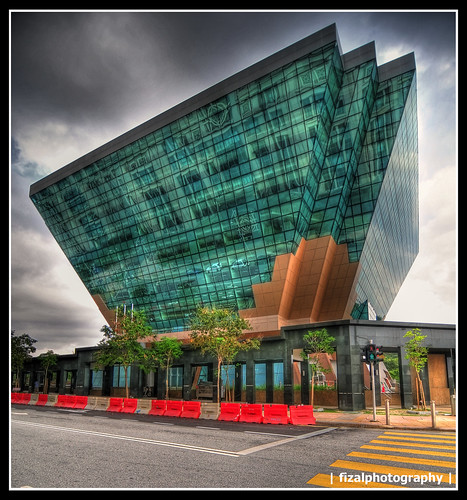
Trapezoidal Architecture


Sunday, February 22, 2015

Peer Reviews: Gothic

This week I reviewed Alex Richardson and Alexandra Ferrara

Alex Richardson: Her blog was spot on, the look is so professional and she really has a great understanding of the Gothic period. She is very correct in saying that architecture was built with the purpose of affecting individuals' mood and spirit in a religious way. Her images were wonderful and the views of the interiors of the cathedrals were absolutely beautiful. I also like that she said the structures were built as a way to reach God, it is amazing that they could even construct such huge intricate structures at this time. The only thing that I was unsure about was her third current application image, I did not see what she thought was Gothic about it, so it would just take some explaining for me to understand. Overall, her blog is awesome!

Alexandra Ferrara: I thought that Alexandra's blog was interesting, she did a good job of covering multiples areas of Gothic design. It was interesting learning more about the domestic interiors because I did not personally look into that area of Gothic design for my blog. The images of the furniture that she found were exactly what I would have imagined seeing inside the interiors of this time period. I also liked the current application images.

Saturday, February 21, 2015

The Gothic Period

The Gothic period was from approximately 1140-1500 A.D. The Gothic period was mainly based on the new styles of architecture that were created at that time. The main type of building that was constructed were Cathedrals, which had very tall arches that reached into the heavens and many works of art created out of stained glass. However, what was created during the Gothic period was not all entirely new ideas, much of the design was based off of ideas from the previous, Romanesque period.

Another interesting fact about this period is that during that time it was not called the "Gothic period" they just called it modern art. It was not until later that it picked up this name, which was first used during the Renaissance period. Those individuals who arrived at this name did so because they felt that the art and architecture of this time was nearly the exact opposite of what was created by the classical Roman style. "Gothic" actually came from the Goths, which were the people who had overrun the Roman empire. This made people of the Renaissance think that the Goths had brought this new design period with them when they conquered the Roman Empire, but they were actually incorrect.

The First Gothic Cathedral:

Somewhere between 1132-1144 A.D. a new cathedral was constructed near Paris, it was named "The Abbey of St. Denis". At that time the abbey was ruled by a great abbot named Suger, who was greatly interested in art of every kind. Suger wanted to make his church the finest and the most beautifully decorated in the Christian world. Although Abbot Suger was a monk dedicated to a life of holiness, he did not believe that God's house should look bare and poor. Suger was fond of people--from the king to the beggar--and wanted them all to come to the services at his church. He insisted on rebuilding the much older St. Denis Church, which was small and old-fashioned. Suger would not let any difficulty stand in his way. He arranged for the stone to be quarried--dug from the ground. He needed long wooden beams for the roof but was told such great timbers were not to be had; so he went out himself and searched in the forests until he found trees big enough to supply the beams he wanted. In the end he succeeded in getting the church built. It was dedicated in the presence of King Louis VII, on July 11, 1144.

St.Denis Cathedral near Paris

Interior of St.Denis


Stained glass telling stories of the Bible in St.Denis

More intricate stained glass in St.Denis Cathedral

The "Rose Window" in the St.Denis Cathedral

The Cathedrals that were constructed during the Gothic period had a few defining features that viewers of such buildings will notice immediately. Those include the pointed arch, rib vault, and the flying buttress. 

Pointed Arch                            Rib Vault                            
              

Flying Buttress   
      

The flying buttress was incorporated as a system of hidden supports for the weight of the architecture. These allowed a more open feeling that meant more windows could be added to architecture so that more natural light could be used in the spaces. This was a major sense of importance during this time period because light was seen as pure and heavenly, almost as if heaven were reaching down and touching earth.


Current Applications:

   
Stained Glass is still an artform that is used by many artists today, whether they be professionals or just DYI crafters, it is something for people of many skill levels to do.


A current day pool house with Gothic influences, i.e. the pointed arches above doorway


Extra Credit:
This is a link to the specific timeline of the Gothic period, including all major events and pieces of artwork. http://www.wga.hu/tours/gothic/timeline.html

Sunday, February 15, 2015

Peer Reviews: Islamic

Allison S and Maggie: Neither of these individuals did a post on the Islamic period so I could not review them.

Peer Review: Romanesque

Allison S: She did not do a blog post for this period, so I could not review her work.

Maggie: I really like her overall blog design, it is simple to navigate and looks very nice. Her information about the Romanesque period was interesting but I felt that it could have included a little more. Although her story about how her family still uses a chest like they did during that time was interesting. My family also uses a chest like that, my grandfather actually makes them for his three daughters and each of us grandchildren. I have one called my "hope chest" that I really cherish.

Saturday, February 14, 2015

Extra Credit: Islamic

I found an overview of the entire Islamic Religion on the BBC website, this link will take you there. It includes information about arts and culture, beliefs, history, holy days, ethics, practices, prayer and worship, rites and rituals, subdivisions and texts. It is very informative and interesting.

http://www.bbc.co.uk/religion/religions/islam/

Mosque


I also found this website on the design of the four different types of arches that the Islamic period is known for.

http://people.opposingviews.com/evolution-islamic-arches-7802.html

Islamic

History:

As with many of the other periods that we have previously studied, the Islamic period is based on the creation of a religion. The Islamic nation was founded by Mohammed, who lived from 570-632 C.E. The Islamic religion began in the Middle East and then spread throughout Africa, Europe and Asia. The center of Islamic worship is called a Mosque, and the first Mosque created was on Mohammed's farm, which was the prototype for all future Mosques to come.

The Mosque:

The features of Mosques include; a perimeter wall, covered hall of columns and a courtyard. The Mosque was built with a specific purpose, it is a place with worshipers can kneel and pray to God, facing the direction of Mecca. The specific design of the Mosques varies depending on what region they are located in, but the main staple elements are the same in all Mosques. Another defining element often seen on the exterior of Mosques is the use of domes and minarets. The most famous example of such design is the Blue Mosque in current day Istanbul, Turkey.

Blue Mosque, built from 1609-1616

The interiors of these Mosques were richly decorated with geometric shapes and many beautiful colors and ornate handmade tiles. 

Interior of the Blue Mosque

The Islamic design period also brought about four new styles of arches. The horseshoe arch, orgival arch, muqarnas-filled niche, muqarnas dome. 

Horseshoe Arch
Orgival Arch

Muqarnas filled-niche
Muqarnas Dome

Present Day:

Orgival Arches at a train station

Horseshoe and Orgival arches

Orgival Arches in an interior

Use of geometric design on interior elements of design

Geometric tiles used in a present day bathroom