Allison S: She did not do a blog post for this period, so I could not review her work.
Maggie: I really like her overall blog design, it is simple to navigate and looks very nice. Her information about the Romanesque period was interesting but I felt that it could have included a little more. Although her story about how her family still uses a chest like they did during that time was interesting. My family also uses a chest like that, my grandfather actually makes them for his three daughters and each of us grandchildren. I have one called my "hope chest" that I really cherish.
Sunday, February 15, 2015

Saturday, February 14, 2015
Extra Credit: Islamic
I found an overview of the entire Islamic Religion on the BBC website, this link will take you there. It includes information about arts and culture, beliefs, history, holy days, ethics, practices, prayer and worship, rites and rituals, subdivisions and texts. It is very informative and interesting.
http://www.bbc.co.uk/religion/religions/islam/

I also found this website on the design of the four different types of arches that the Islamic period is known for.
http://people.opposingviews.com/evolution-islamic-arches-7802.html

http://www.bbc.co.uk/religion/religions/islam/
I also found this website on the design of the four different types of arches that the Islamic period is known for.
http://people.opposingviews.com/evolution-islamic-arches-7802.html
Islamic
History:
As with many of the other periods that we have previously studied, the Islamic period is based on the creation of a religion. The Islamic nation was founded by Mohammed, who lived from 570-632 C.E. The Islamic religion began in the Middle East and then spread throughout Africa, Europe and Asia. The center of Islamic worship is called a Mosque, and the first Mosque created was on Mohammed's farm, which was the prototype for all future Mosques to come.
The Mosque:
The features of Mosques include; a perimeter wall, covered hall of columns and a courtyard. The Mosque was built with a specific purpose, it is a place with worshipers can kneel and pray to God, facing the direction of Mecca. The specific design of the Mosques varies depending on what region they are located in, but the main staple elements are the same in all Mosques. Another defining element often seen on the exterior of Mosques is the use of domes and minarets. The most famous example of such design is the Blue Mosque in current day Istanbul, Turkey.
The interiors of these Mosques were richly decorated with geometric shapes and many beautiful colors and ornate handmade tiles.
The Islamic design period also brought about four new styles of arches. The horseshoe arch, orgival arch, muqarnas-filled niche, muqarnas dome.
Present Day:
As with many of the other periods that we have previously studied, the Islamic period is based on the creation of a religion. The Islamic nation was founded by Mohammed, who lived from 570-632 C.E. The Islamic religion began in the Middle East and then spread throughout Africa, Europe and Asia. The center of Islamic worship is called a Mosque, and the first Mosque created was on Mohammed's farm, which was the prototype for all future Mosques to come.
The Mosque:
The features of Mosques include; a perimeter wall, covered hall of columns and a courtyard. The Mosque was built with a specific purpose, it is a place with worshipers can kneel and pray to God, facing the direction of Mecca. The specific design of the Mosques varies depending on what region they are located in, but the main staple elements are the same in all Mosques. Another defining element often seen on the exterior of Mosques is the use of domes and minarets. The most famous example of such design is the Blue Mosque in current day Istanbul, Turkey.
 |
| Blue Mosque, built from 1609-1616 |
The interiors of these Mosques were richly decorated with geometric shapes and many beautiful colors and ornate handmade tiles.
 |
| Interior of the Blue Mosque |
The Islamic design period also brought about four new styles of arches. The horseshoe arch, orgival arch, muqarnas-filled niche, muqarnas dome.
 |
| Horseshoe Arch |
 |
| Orgival Arch |
 |
| Muqarnas filled-niche |
 |
| Muqarnas Dome |
Present Day:
 |
| Orgival Arches at a train station |
 |
| Horseshoe and Orgival arches |
 |
| Orgival Arches in an interior |
 |
| Use of geometric design on interior elements of design |
 |
| Geometric tiles used in a present day bathroom |
Friday, February 13, 2015
Romanesque
History:
The Romanesque period was a period of art that started in Italy and Southern France in around 800 A.D. This style is based on the basics of Roman architecture, most prominently the Roman arch. "When Charlemagne was crowned Holy Roman Emperor in 800 C.E., Europe began to take its first steps out of the “Dark Ages” since the fall of Rome in the fifth century. The remains of Roman civilization were seen all over the continent, and legends of the great empire would have been passed down through generations. So when Charlemagne wanted to unite his empire and validate his reign, he began building churches in the Roman style–particularly the style of Christian Rome in the days of Constantine, the first Christian Roman emperor." (khanacademy.org)


The Romanesque period was a period of art that started in Italy and Southern France in around 800 A.D. This style is based on the basics of Roman architecture, most prominently the Roman arch. "When Charlemagne was crowned Holy Roman Emperor in 800 C.E., Europe began to take its first steps out of the “Dark Ages” since the fall of Rome in the fifth century. The remains of Roman civilization were seen all over the continent, and legends of the great empire would have been passed down through generations. So when Charlemagne wanted to unite his empire and validate his reign, he began building churches in the Roman style–particularly the style of Christian Rome in the days of Constantine, the first Christian Roman emperor." (khanacademy.org)
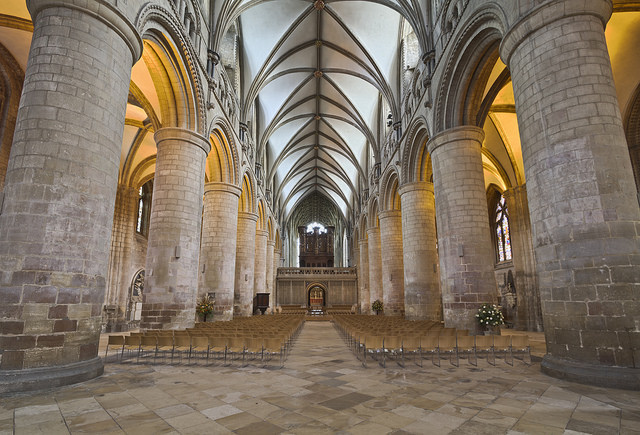 |
| Gloucester Cathedral, nave, built in 1089 |
Charlemagne was concerned with preserving many forms of art. He encouraged learning the arts, preserved Roman literature, established schools and monasteries, and encouraged building using the technology of Roman structures. One thing that is incredibly well known from this time period is the creation of illuminated manuscripts. These were works of art created telling the stories of the bible, often drawn by the monks in monasteries. They were very detailed works of art that were admired by many people of the time and are still admired today. It also included the use of beautiful calligraphy.
 |
| Illuminated Manuscripts with calligraphy |
 |
| An illuminated manuscript telling stories of the Bible |
The most important form of architecture during this period was the church. The main elements of these churches included semicircular arches and vaulted ceilings, mimicked the Early Christian basilica, side chapels were added to the transept, multiple aisles, larger for more worshipers, and areas for a choir were added.
Current Applications:
 |
| Mega Church with vaulted ceilings |
 |
| Mega Churches |
 |
| Semi-circirular arch |
Sunday, February 8, 2015
Peer Review: Byzantine
Samantha Marnell: Did not do a post on the Byzantine period, so I could not review her work.
Katie Kaywood: I thought that her photos were nice and that she had the basic facts about the period, but I would have liked to see more information. Also, I did notice some grammatical errors that made what she was trying to say slightly confusing. I would recommend re-reading her posts before she publishes them. Also, I did not quite understand the first two current examples?
Katie Kaywood: I thought that her photos were nice and that she had the basic facts about the period, but I would have liked to see more information. Also, I did notice some grammatical errors that made what she was trying to say slightly confusing. I would recommend re-reading her posts before she publishes them. Also, I did not quite understand the first two current examples?
Peer Review: Early Christian
Samantha Marnell: I thought that her information was good, however it wasn't much and I didn't really learn anything from it that we hadn't already heard in class. I would have liked to see a little more. Also, I could not get any of her pictures to download so I have no clue what they looked like.
Katie Kaywood: I really enjoyed the overall design of Katie's blog, it looks very professional and chic. I thought that she had a good grasp on the overall Early Christian time period and her photos were spot on. The photos of current application were great and I especially like the second photo, with the ceiling and rug that almost seemed to reflect one anothers patterns. Also, the video was a great addition, I did not watch the entire thing but it did seem very informative.
Katie Kaywood: I really enjoyed the overall design of Katie's blog, it looks very professional and chic. I thought that she had a good grasp on the overall Early Christian time period and her photos were spot on. The photos of current application were great and I especially like the second photo, with the ceiling and rug that almost seemed to reflect one anothers patterns. Also, the video was a great addition, I did not watch the entire thing but it did seem very informative.
Saturday, February 7, 2015
Byzantine
The History:
The Byzantine period happened from 330-1453 C.E. which means that about half of this period was also the Early Christian period, so there are a lot of similarities. However, the Byzantine empire is the longest political entity in European history. This empire was based on Eastern culture and was influenced by the Greeks and Orient. The Byzantine empire was headquartered in Constantinople which is current day Istanbul. The video included below does a great job of explaining more about this region and the fall of the empire. The other link goes into more detail about other aspects of life during the Byzantine empire, including art, lifestyles and the politics.
http://www.history.com/topics/ancient-history/byzantine-empire
http://listverse.com/2013/04/20/10-interesting-facts-about-the-byzantine-empire/
Architecture:
During this period much of the architecture was again religious in nature. The one type of architecture that stands out the most from this time period is the Pendentive. A pendentive is a structure with a dome top placed on a square base. This was influenced by the dome from the East and the square base of a classical Western temple.
 |
| The basic form of a Pendentive structure |
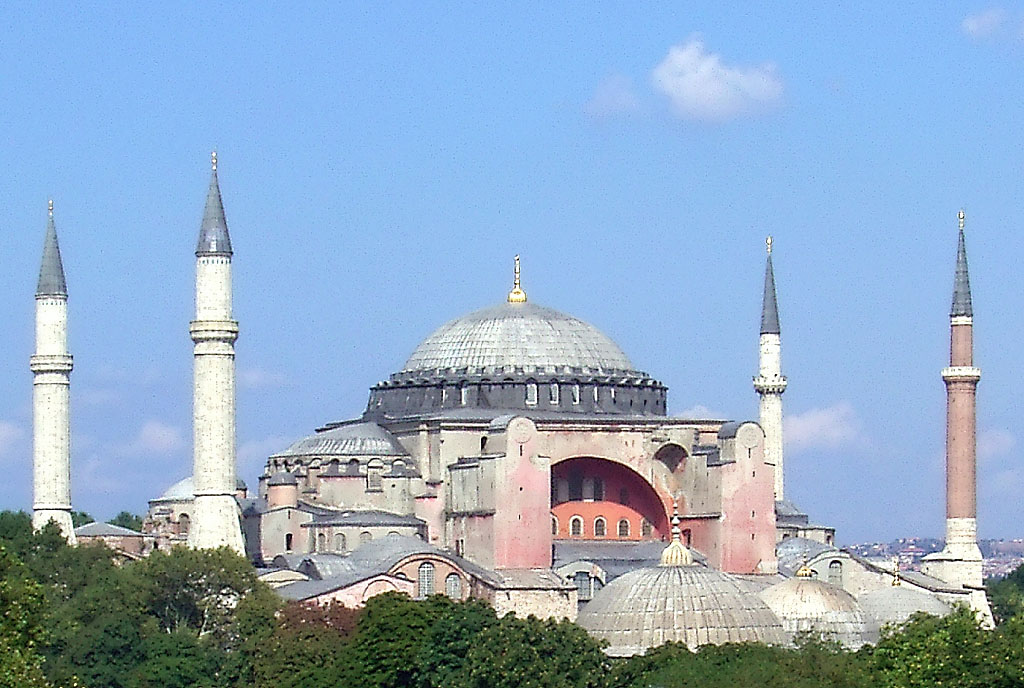 |
| Pendentive Construction; Hagia Sophia |
 |
| Hagia Sophia interior |
 |
| The Hagia Sophia has combination of the classic Basilica and centralized church plans. |
The most famous example of this construction type is the Hagia Sophia, which was constructed in 360 C.E. by Emperor Konstantios (337-361). However, the first church was constructed of wood and was burned in a riot in 404 C.E. So a second building was reconstructed in the same spot, by Emperor Emperor Theodosios II (408-450) in 415. This second, basilical structure, is known to contain five naves and a monumental entrance; it was also covered by a wooden roof. "The church was demolished in January 13, 532, after the public riot (Nika revolts) that took place during the fifth year of Emperor Justinianos’ reign (527-565), when the ‘blues’ who represented the aristocrats, and the ‘greens’ who represented the tradesman and merchants in the society, collaborated against the Empire." (http://ayasofyamuzesi.gov.tr/en/history) This meant that the church had to be constructed a third time and this was done by Isidoros (Milet) and Anthemios (Tralles), who were renowned architects of their time, by Emperor Justinianos’s (527-565) orders. The current structure was completed and put into use on December 27, 537, just five short years after construction began. The link above gives more specifics on the process and history of the project, it was really quite an amazing feat for the time period.
Current Applications:
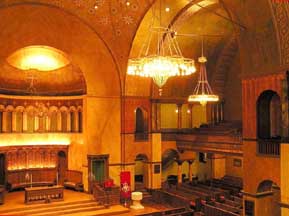 |
| Byzantine, Pendentive inspired modern day church |
 |
| A Pendentive style gazebo |
| A home based on the idea of Pendentive construction |
 |
| An interior with Byzantine inspiration |
 | |
| I thought this was neat, it is a Byzantine inspired Iphone case, with an image from a Byzantine church. |
Subscribe to:
Posts (Atom)